Is Solar Energy Renewable?

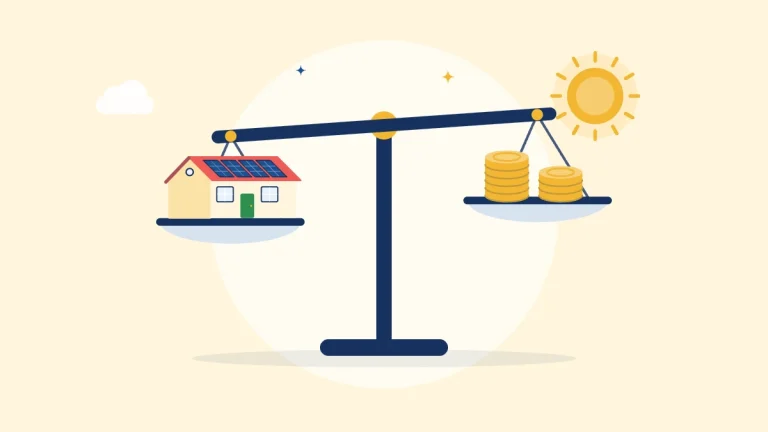
Quick answer: Yes. Sunlight is continuously replenished and using it doesn’t reduce what arrives tomorrow, so solar energy is fully renewable. The panels themselves are made from mined materials, but they pay back their manufacturing energy in about a year and last for decades.
Solar energy is about as renewable as an energy source gets. The question gets more interesting when you look at the panels, batteries and other equipment we use to capture it, which are made from materials that aren’t renewable.
What “renewable” means
A renewable energy source is one that’s naturally replenished on a human timescale, so using it doesn’t reduce what’s available later. Sunlight fits that definition perfectly. Every day, the sun delivers far more energy to Earth than people use, and capturing some of it with solar panels doesn’t reduce the amount that arrives tomorrow.
By contrast, coal, oil and natural gas took millions of years to form and are being used much faster than they’re replaced. Nuclear power is often grouped with renewables because it’s low-carbon, but its fuel, uranium, is a mined resource that isn’t replenished, so it isn’t renewable in the strict sense.
Renewable isn’t the same as clean or sustainable
These three words often get used as if they mean the same thing:
- Renewable is about whether the energy source runs out.
- Clean is about pollution and emissions when the energy is produced.
- Sustainable takes in the whole picture, including materials, land use and waste.
Solar does well on all three, though not perfectly on the last. Other renewables have their own trade-offs: large hydroelectric dams, for instance, flood valleys and change river ecosystems.
What about the equipment?
Solar panels are made mostly of glass, aluminum and silicon, with small amounts of silver, copper and other materials. These have to be mined and processed, which takes energy and has environmental impacts. Batteries add lithium and other metals.
Two facts help put this in perspective:
- A modern silicon panel produces as much energy as it took to make in about a year, according to Fraunhofer ISE, and then keeps producing for 25 to 30 years or more. See whether panels use more energy to make than they produce.
- Over their full life cycle, rooftop panels produce around 41 grams of CO2 per kWh by IPCC estimates, compared with about 490 grams for natural gas and 820 for coal.
Recycling is the piece still catching up. Most of a panel by weight is glass and aluminum, which can be recycled, but dedicated panel recycling is still limited in many areas and often costs more than landfilling. As the first large wave of panels reaches the end of its life, recycling programs are expected to grow.
Will the sun run out?
Eventually, but not on any timescale that matters for us. NASA puts the sun’s age at about 4.6 billion years, with roughly 5 billion years left before it swells into a red giant. At that point it will swallow Mercury and Venus and possibly Earth. Nothing we do with solar panels affects that timeline, because they only capture light that’s already arriving here.
The bottom line
The energy source is fully renewable. The equipment is made from finite materials, but it pays back its energy cost quickly, runs for decades, and is increasingly recyclable. For more, see what solar energy is and the environmental benefits of solar.