Can You Make Money with Solar Panels?
Quick answer: Mostly through lower electric bills. Some utilities credit or pay you for power you send to the grid, and a few states pay for the solar energy you produce or for letting your battery help the grid, but big checks from the utility are rare.
You may have heard a neighbor say their solar panels “make money.” Usually what they mean is that their electric bill dropped close to zero. Actual checks from the utility are less common and usually small, although a few states and programs do pay solar and battery owners real money.
Most of the value is bill savings
For most homeowners, the money solar “makes” is the electricity you no longer buy. At the 2025 national average of about 17.3 cents per kWh, a system that produces 10,000 kWh a year is worth roughly $1,700 a year in avoided electricity. In high-price states like Hawaii, California or Massachusetts, the same output is worth far more.
Our article on how much you can save with solar walks through the math.
How the utility credits the power you send back
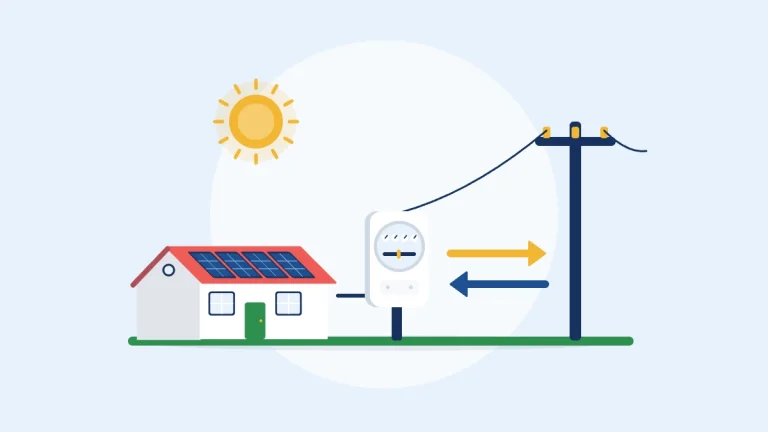
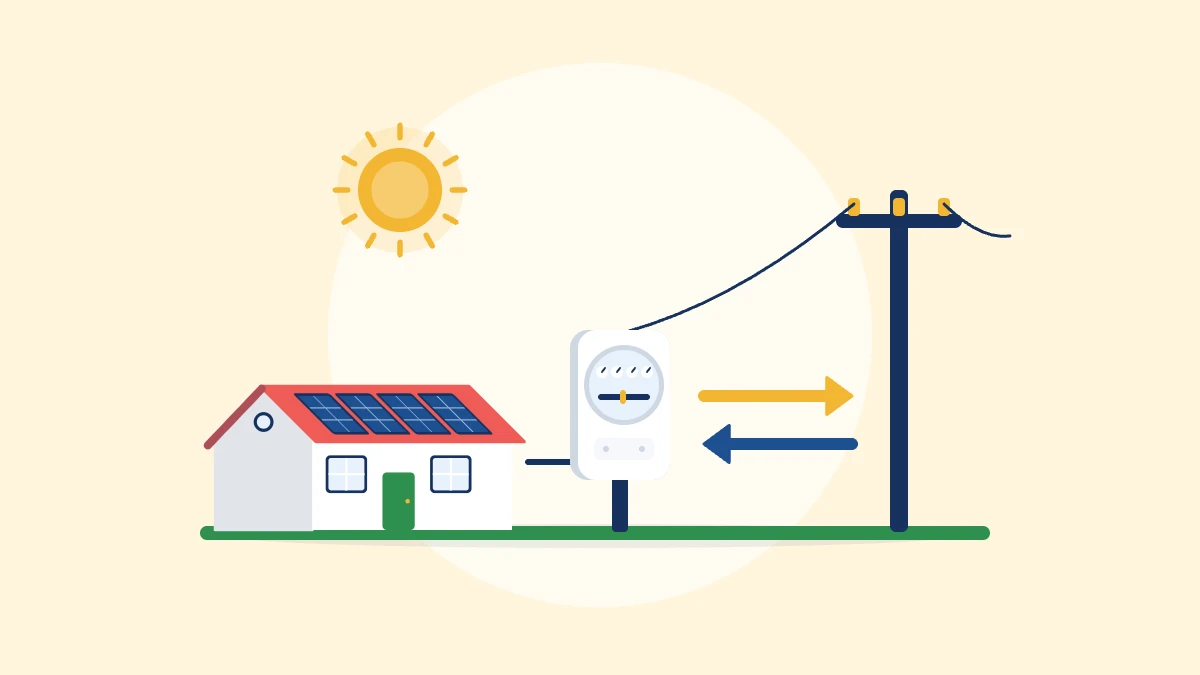
At midday your panels often produce more than your home is using, and the extra flows to the grid. What that power is worth depends on your state and utility.
- Net metering credits exported power at the full retail rate. Your meter effectively runs backward, and credits from sunny months can cover bills in darker months.
- Net billing credits exports at a lower rate, often based on the utility’s avoided cost. California moved new customers to net billing in April 2023, cutting export credits by roughly 75%.
- Buy-all/sell-all arrangements, used by some utilities, pay a set rate for everything the system produces while you buy all your power at the normal rate.
Net metering is set by each state, not by the federal government. A 2005 federal law asked states to consider net metering standards, but it didn’t require them to adopt one, which is why the rules vary so much. Many utilities also settle up once a year, and leftover credits are often paid out at a low rate or simply expire. That’s one reason oversizing a system to “sell” lots of power rarely pays off.
Where solar owners can earn actual payments
Solar renewable energy certificates
In some states, your system earns certificates for the clean power it produces, and you can sell them. In 2026, New Jersey’s program pays a fixed rate per MWh for 15 years, Massachusetts’ SMART 3.0 program pays 3 cents per kWh for 20 years on small systems, Illinois buys certificates through the Illinois Shines program, and certificates in Washington, DC have traded around $330 to $350 each. In most other states these markets are small or don’t exist.
Battery programs
If you have a home battery, some utilities pay you to let it feed the grid during peak demand. Massachusetts’ ConnectedSolutions program pays $275 per kW of average summer performance, which comes to around $1,200 a year for many participants. Connecticut, Rhode Island and Vermont have similar programs. Our guide to solar backup batteries covers how these work.
Higher home value
Studies have found that homes with owned solar systems tend to sell for more, though the premium varies. Leased systems usually add little. See how solar affects property value.
A few things to watch
- If you lease your panels or have a PPA, the leasing company usually keeps any certificates and tax benefits.
- Many utilities cap system size at roughly your past usage, so you can’t simply build a bigger system to sell power.
- Fixed monthly charges stay on your bill even when your usage nets out to zero.
- The 30% federal tax credit for homeowners ended for systems installed after December 31, 2025, so payback now depends more on these state and utility programs.
So, can you make money?
Over the life of a well-priced system in a good location, the electricity savings usually add up to more than you paid, which is a real return. Direct cash payments are a bonus in a handful of states rather than the main event. Check your utility’s export rules and your state’s programs before you count on them, since both change often.
Sources
- EIA: Short-Term Energy Outlook, electricity prices
- CPUC: Net energy metering and net billing
- Congressional Research Service: Energy Policy Act of 2005 electricity provisions
- MassCEC: Guide to the SMART 3.0 program
- Illinois Shines: Small distributed generation
- DSIRE: Database of State Incentives for Renewables & Efficiency