What Kind of Solar Inverter Do I Need?
Quick answer: Most homes use either microinverters or a string inverter paired with power optimizers, which handle shade well and meet safety rules. A plain string inverter is the budget choice for a simple, unshaded roof, and a hybrid inverter makes sense if you’re adding a battery.
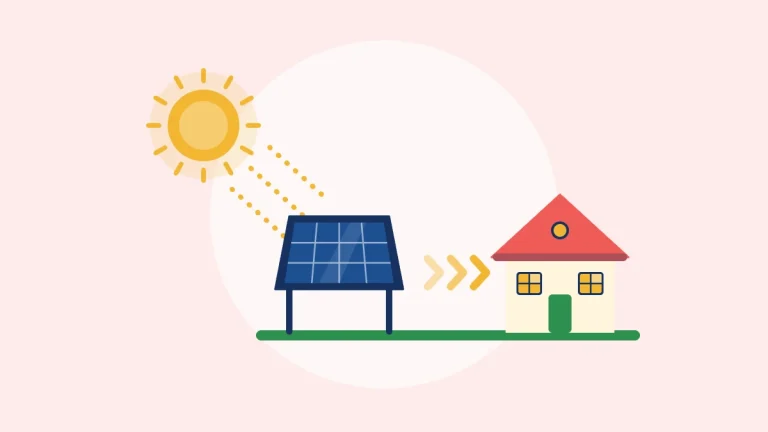
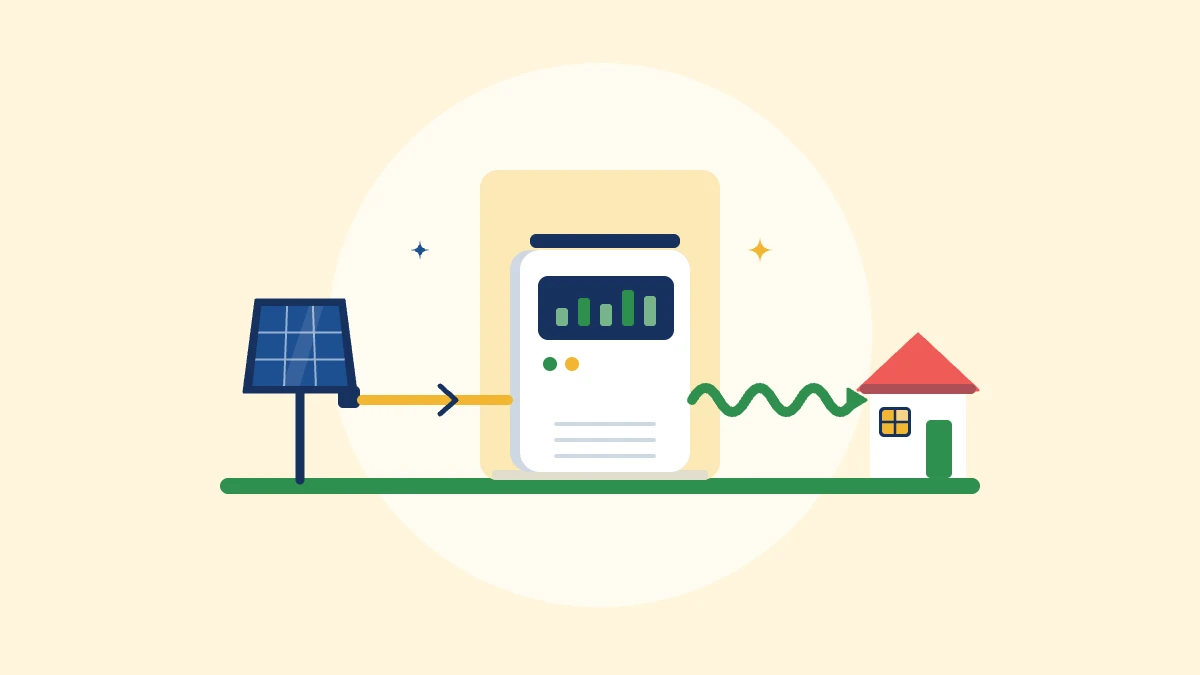
Solar panels produce direct current (DC), but your home and the grid run on alternating current (AC). The inverter converts one to the other. It also manages how much power the panels deliver, handles safety shutdowns and usually provides the monitoring app. It’s the part of a solar system most likely to need replacing, so it’s worth understanding your options.
The main types
String inverters
A single box, usually mounted near your electrical panel, converts power from a “string” of panels wired together. String inverters are the simplest and usually the cheapest option. The downside is that panels on a string perform as a group, so shade on one panel can pull down the others. Warranties are typically 10 to 12 years, often extendable.
String inverters with power optimizers
A power optimizer is a small device mounted under each panel. It doesn’t convert DC to AC. Instead, it tunes each panel’s output and sends DC power on to a central string inverter. You get panel-by-panel performance and monitoring, and less loss from shade. SolarEdge is the best-known example, with 12-year inverter warranties and 25-year optimizer warranties.
Microinverters
A microinverter under each panel converts that panel’s power to AC right on the roof. Each panel works independently, which helps with shade and roofs that face several directions, and a single failure only affects one panel. Enphase is the leading brand, with 25-year warranties. Microinverters cost more upfront than a string inverter.
Hybrid inverters
A hybrid inverter manages solar panels, a battery and the grid in one unit. It’s the common choice when a battery is part of the system from the start. Tesla’s Powerwall 3, for example, has a solar inverter built in. See solar backup batteries.
Battery inverters
A battery inverter handles only the battery. It’s often used to add storage to an existing solar system without replacing the original inverter.
What most homes use now
Panel-level electronics have become the norm. Lawrence Berkeley National Laboratory found that 87% of residential systems installed in 2024 used microinverters or optimizers, and microinverters alone made up 56%, up from 33% in 2019. Part of the reason is safety: the National Electrical Code requires rooftop systems to have “rapid shutdown,” which quickly reduces voltage on the roof for firefighters, and panel-level devices make that straightforward.
How big should the inverter be?
Inverters are usually a bit smaller than the panel array. A ratio of DC panel capacity to AC inverter capacity of about 1.1 to 1.3 is typical for homes. Panels rarely produce their full rated power in real conditions, so a slightly smaller inverter loses very little energy and costs less. Your installer will size it based on your panels, roof direction and climate.
Other things to compare
- Warranty length and whether the manufacturer is likely to be around to honor it.
- Efficiency. Most modern inverters convert 96% to 99% of the power they receive.
- Battery compatibility, if you might add storage later.
- Monitoring. Panel-level monitoring makes it easier to spot problems.
- Backup capability. Some systems can power certain circuits during an outage with the right equipment. See solar during power outages.
Which one should you get?
- Simple, unshaded roof facing one direction: a string inverter keeps costs down.
- Some shade or several roof faces: microinverters or optimizers.
- Battery now or soon: a hybrid inverter or a battery with a built-in inverter.
Modified sine wave inverters, which you may see mentioned for small off-grid or RV setups, aren’t used for grid-tied home systems. For a small off-grid setup, see our guide to RV solar.