How Does Solar Energy Work?
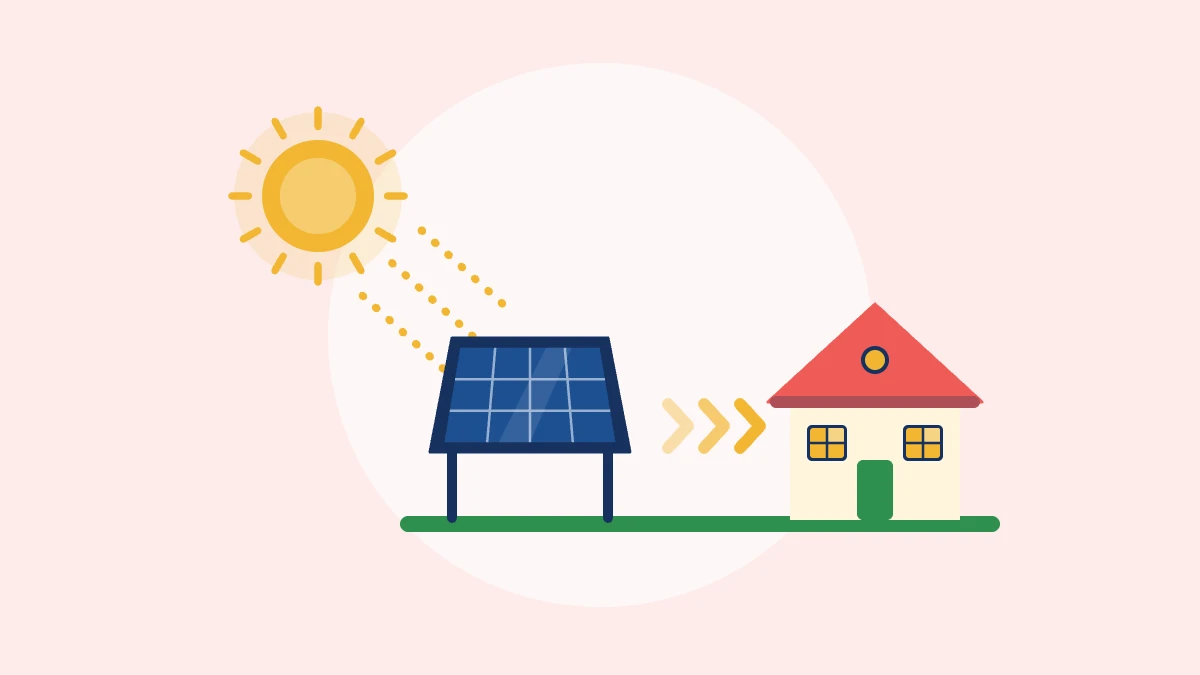
Quick answer: Solar panels are made of silicon cells. When sunlight hits them, it knocks electrons loose, and an electric field built into each cell pushes those electrons into a current. An inverter converts that DC current into the AC power your home uses, and any extra flows to the grid.
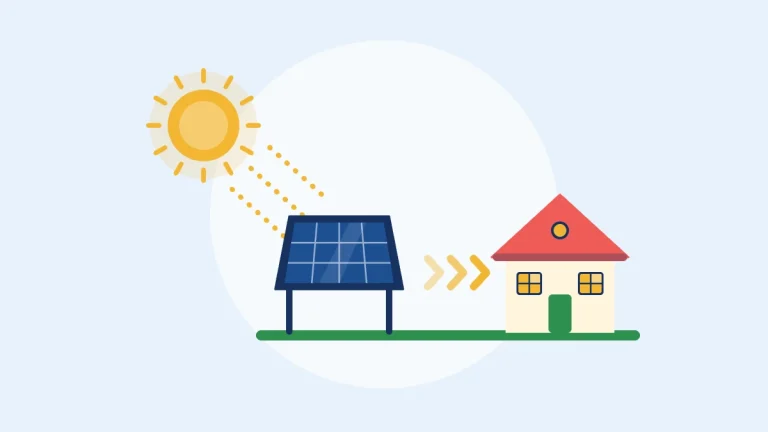
A rooftop solar system turns sunlight into the same kind of electricity that comes from the grid. The process has no moving parts, which is a big reason solar panels last so long. Here’s what happens between the sun hitting your roof and your lights turning on.
Step 1: Sunlight hits the solar cells
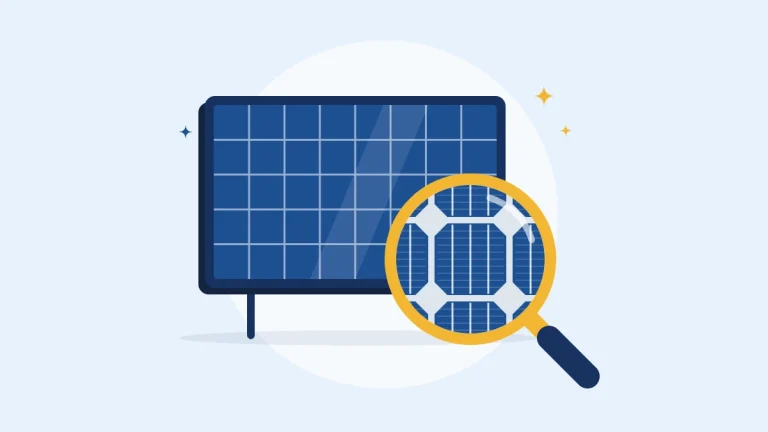
Sunlight is made of tiny packets of energy called photons. A solar panel is made of dozens of solar cells, and almost all of them today are thin slices of crystalline silicon. Crystalline silicon accounts for about 98% of the solar panels made worldwide, according to Fraunhofer ISE.
When a photon with enough energy hits the silicon, it knocks an electron loose from its place in the crystal. On its own, that electron would just drift around and eventually settle back down, releasing its energy as heat.
Step 2: The cell pushes electrons in one direction
Each cell is made of two layers of silicon that have been treated slightly differently, one with a bit of extra electrons and one with a shortage. Where they meet, called the p-n junction, there’s a built-in electric field. That field pushes the freed electrons toward one side of the cell. Thin metal lines on the cell collect them, and when the cell is connected to a circuit, the electrons flow through it as electric current. This is the photovoltaic effect, first observed by Edmond Becquerel in 1839.
Step 3: Cells combine into panels and arrays
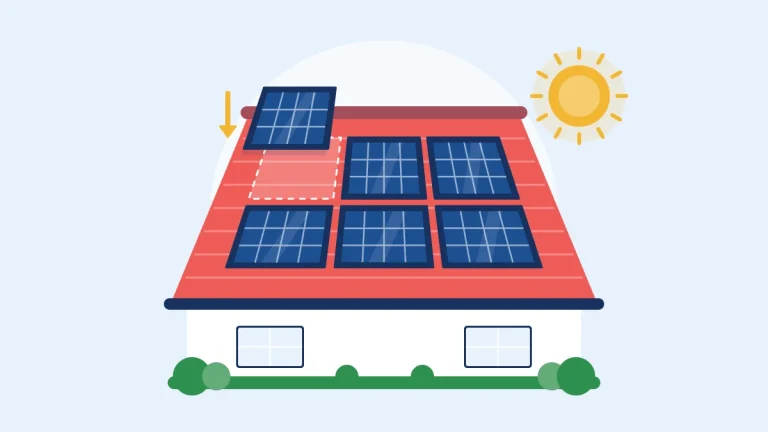
A single cell produces only about half a volt. Cells are wired together inside a panel, and panels are wired together into an array on your roof. A typical home panel today is rated around 400 to 450 watts, and a typical home system has somewhere around 15 to 25 panels.
Step 4: The inverter converts DC to AC
Solar cells produce direct current (DC), where electricity flows in one direction. Homes and the grid use alternating current (AC). The inverter makes the conversion. It also adjusts how the panels operate to get the most power from them, monitors the system and shuts it down safely when needed. Many homes now use microinverters or power optimizers on each panel, which helps when some panels are shaded. See what kind of solar inverter you need.
Step 5: Your home uses the power first
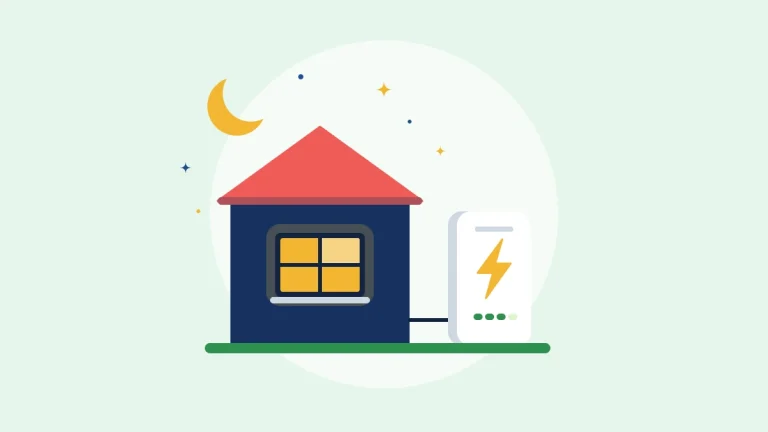
The AC power flows into your electrical panel and runs whatever is on in your house. If the panels are making more than you’re using, the extra flows out to the grid through your meter. If they’re making less, like at night or on a cloudy afternoon, you draw the difference from the grid automatically. You don’t have to flip any switches.
Step 6: The utility tracks what goes in and out
A bidirectional meter records electricity coming from the grid and electricity your home sends back. Depending on your state and utility, exports may earn full retail credit (net metering) or a lower rate (net billing). Our article on solar meters and net metering explains the options.
What about batteries and outages?
A home battery can store extra solar power for the evening or for outages. Without a battery and the right equipment, a grid-tied system shuts off during a power outage to protect utility workers repairing the lines. See whether solar works in a power outage.
Solar thermal: a different way to use the sun
Not all solar technology makes electricity. Solar thermal collectors absorb sunlight as heat, usually to warm water for a home or a pool. They’re simpler than solar panels and very efficient at making heat, but they don’t produce electricity. See solar water heaters.
What affects how much power you get
- Sunlight: your location, the season and the weather.
- Direction and tilt: south-facing roofs produce the most in the US.
- Shade from trees, chimneys or nearby buildings.
- Temperature: panels are slightly less efficient when they’re hot.
- Panel efficiency: most home panels today convert about 21% to 24% of the sunlight hitting them.