How Do You Clean Solar Panels on a Roof?
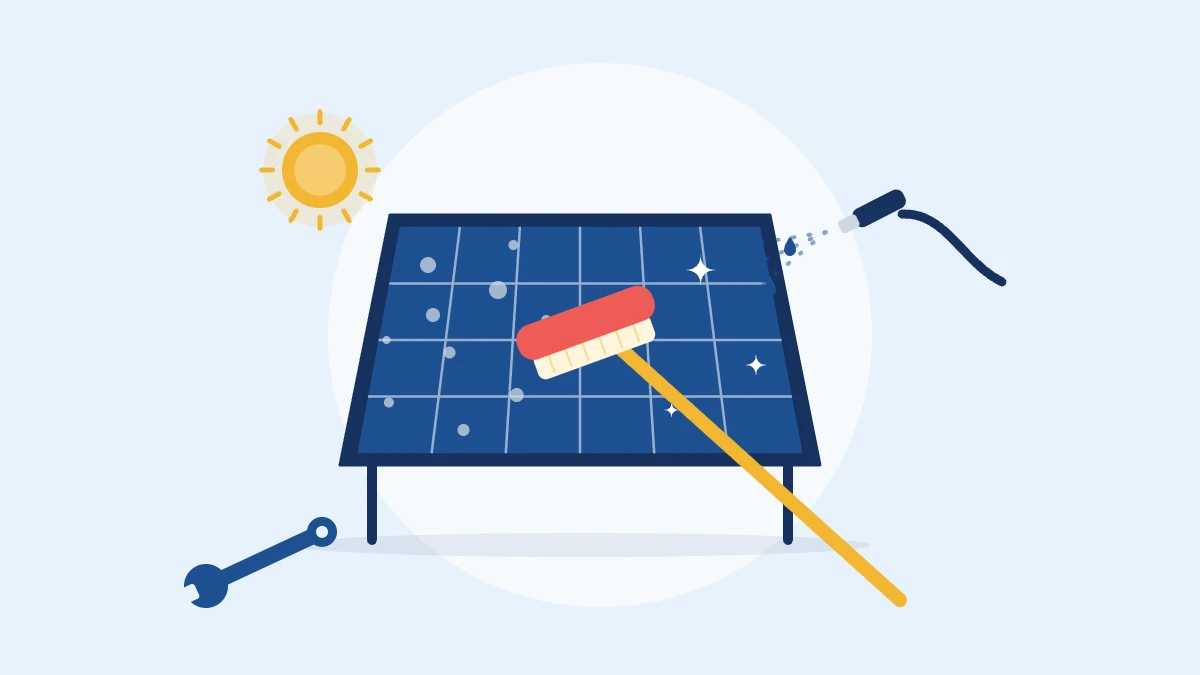
Quick answer: Often you don’t need to. Rain keeps most panels clean enough. When they do need it, rinse them with a garden hose and use a soft brush on stubborn spots, with the system shut down and early or late in the day. Never use a pressure washer, and hire a pro if the roof is high or steep.
Before you get the ladder out, it’s worth asking whether your panels need cleaning at all. In most of the US, rain keeps them clean enough, and the small gain from washing them isn’t worth the risk of climbing onto a roof.
Do your panels need cleaning?
Cleaning is worth it when:
- You can see a buildup of dust, pollen, bird droppings, ash or leaves.
- Your monitoring app shows output dropping without another explanation, like shorter winter days or new shade.
- You live somewhere dry and dusty, near farm fields or construction, or under trees that drop sap or pollen.
- Your panels have a low tilt, which lets dirt collect instead of washing off.
If none of that applies, you can usually leave them alone.
Check the manual first
Panel manufacturers publish cleaning instructions, and following them protects your warranty. Most recommend plain water and a soft brush or sponge, and warn against pressure washers, abrasive pads and harsh chemicals. Some allow a mild, non-abrasive soap.
Safety first
Falls are the real danger. If the panels are on a second story or a steep roof, or you’re not comfortable on a ladder, hire a professional cleaner. They typically charge $150 to $500 per visit.
It’s also important to understand that solar panels produce electricity whenever light hits them. You can’t simply switch them off. Shut the system down using the steps in your installer’s instructions, usually a rapid-shutdown switch or the inverter’s AC disconnect, which de-energizes the wiring on most modern systems. Never spray water at wiring, junction boxes or the back of the panels, and don’t touch damaged panels or exposed wires.
How to clean panels, step by step
- Pick the right time. Early morning, evening or an overcast day. Hot panels can crack if hit with cold water, and water dries into spots quickly in the sun.
- Shut the system down as your installer describes.
- Brush off loose debris like leaves and dust with a soft brush on an extension pole, working from the ground where you can.
- Rinse with a garden hose at normal pressure. Rinsing alone removes most dirt.
- Scrub stubborn spots gently with a soft brush or sponge and plain water. If your manufacturer allows it, use a little mild soap, then rinse well so no residue is left.
- Turn the system back on and check your monitoring app to confirm it’s producing normally.
What to avoid
- Pressure washers, which can damage the glass, seals and frame.
- Abrasive sponges, scouring powder, steel wool or stiff brushes.
- Harsh chemicals or solvents.
- Walking on panels or leaning a ladder against them.
- Hard water, if yours leaves heavy mineral spots. Deionized or filtered water helps.
Keeping panels cleaner longer
Trimming overhanging branches cuts down on leaves, sap and bird perches. Critter guards around the edge of the array stop birds and squirrels from nesting underneath. In snowy areas, let snow slide off on its own rather than scraping it, since scraping can scratch the glass.
Cleaning is only one small part of solar upkeep. Our article on solar maintenance costs covers inspections and inverter replacement, and how long solar panels last explains what actually wears out.