Can You Put Solar Panels on a Flat Roof?
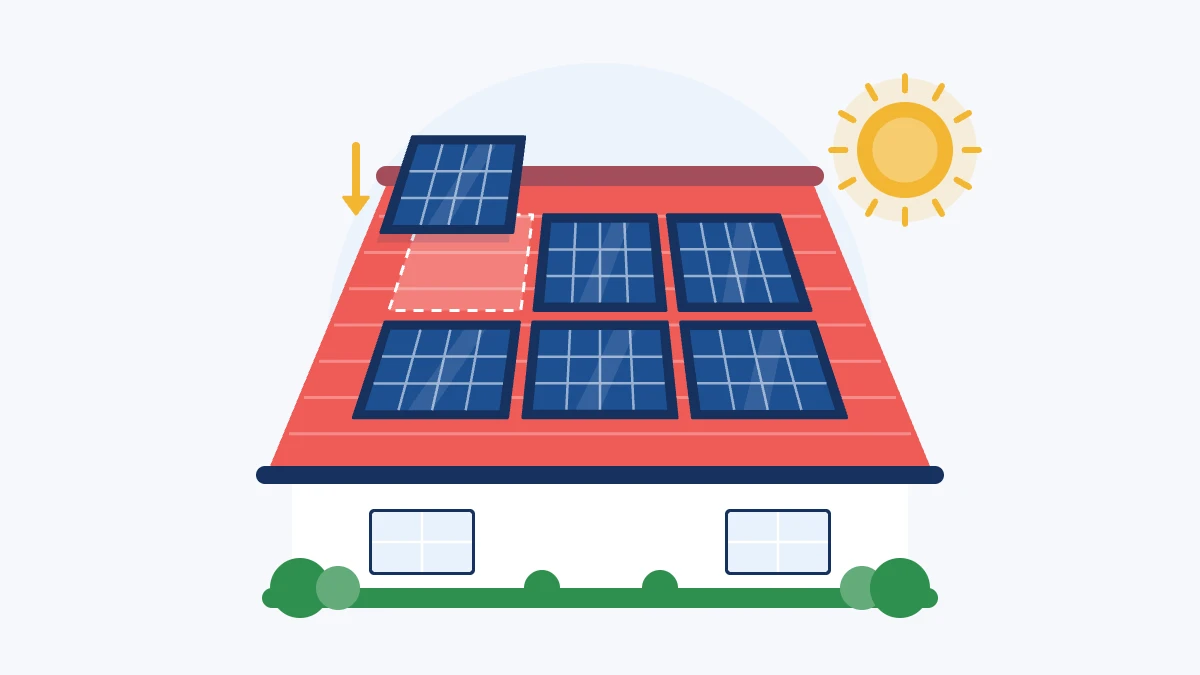
Quick answer: Yes. Solar panels work well on flat roofs. Installers mount them on tilted racks, either weighed down with ballast or anchored to the structure, so they face the sun and shed rain. The roof membrane’s condition and the weight of any ballast are the main things to check first.
Flat and low-slope roofs are common on commercial buildings, modern homes, additions and garages, and they can work very well for solar. The main differences from a sloped roof are how the panels are tilted and how they’re held in place.
Panels are usually tilted, not laid flat
Installers mount panels on angled racks so they face the sun. Even a small tilt helps rain wash off dust and keeps water from sitting on the glass. Some panel manufacturers specify a minimum tilt in their installation manuals, so laying panels completely flat can create warranty problems as well as dirt buildup.
There are two common layouts:
- South-facing rows at a moderate tilt produce the most energy per panel. The rows have to be spaced apart so they don’t shade each other, which limits how many fit.
- East-west layouts use a low tilt with panels back to back, like a series of small tents. Each panel produces a bit less, but more panels fit in the same space, and the low profile catches less wind.
How the racks are held down
Ballasted systems
Ballasted racks sit on the roof and are weighed down with concrete blocks, so there are few or no holes through the roof. They add weight, often several pounds per square foot, so the roof structure needs to be checked by an installer or engineer.
Attached systems
Attached racks are anchored to the building’s structure through the roof, with flashing and sealant at each penetration. They’re lighter and handle high winds better, but every penetration has to be sealed properly to avoid leaks.
Many installations use a mix of the two, with some anchors plus lighter ballast.
Protecting the roof
Flat roofs are usually covered with a membrane such as TPO, EPDM or modified bitumen. Installers put protective pads under the racks so they don’t wear through it. Before installing, it’s worth checking:
- How many years the membrane has left. If it’s near the end of its life, replace it first.
- Whether the roofing warranty requires a specific installer or approval for rooftop equipment.
- That the layout leaves drains and walkways clear, and doesn’t trap water.
Advantages of a flat roof
- Panels can face the best direction no matter which way the house faces.
- Panels are often hidden from the street.
- Crews can work more safely than on a steep roof.
- Cleaning and maintenance are easier.
Drawbacks
- Racking costs more than simple rails on a sloped roof, so the price per watt is often a bit higher.
- Ballast adds weight, which some roofs can’t take.
- Low-tilt panels collect more dust and debris in dry climates.
- Wind design is more involved, especially on taller buildings.
Is your flat roof strong enough?
Most flat roofs in good condition can carry a solar array, but ballasted systems make the structural check more important. Our articles on roof strength and solar panel weight cover the details. If you’re comparing quotes, ask each installer which racking system they plan to use, how it’s attached, and how they’ll protect the membrane.