Solar Cell Phone Chargers: What to Look For and Popular Options
Quick answer: For most people, a folding solar panel of about 20 to 30 watts with USB-C, paired with a regular power bank, works best. Solar power banks with tiny built-in panels charge very slowly. Well-known options include panels from Anker, BigBlue, Nitecore, Goal Zero and BioLite.
A solar phone charger lets you top up your phone while camping, hiking, traveling or riding out a power outage. They work, but they’re slower and more weather-dependent than most product listings suggest. Here’s how to pick one that fits how you’ll actually use it.
Two main types
Folding solar panels
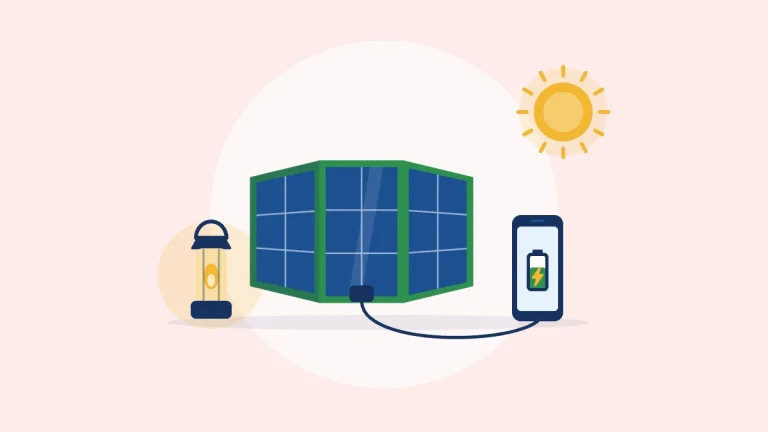
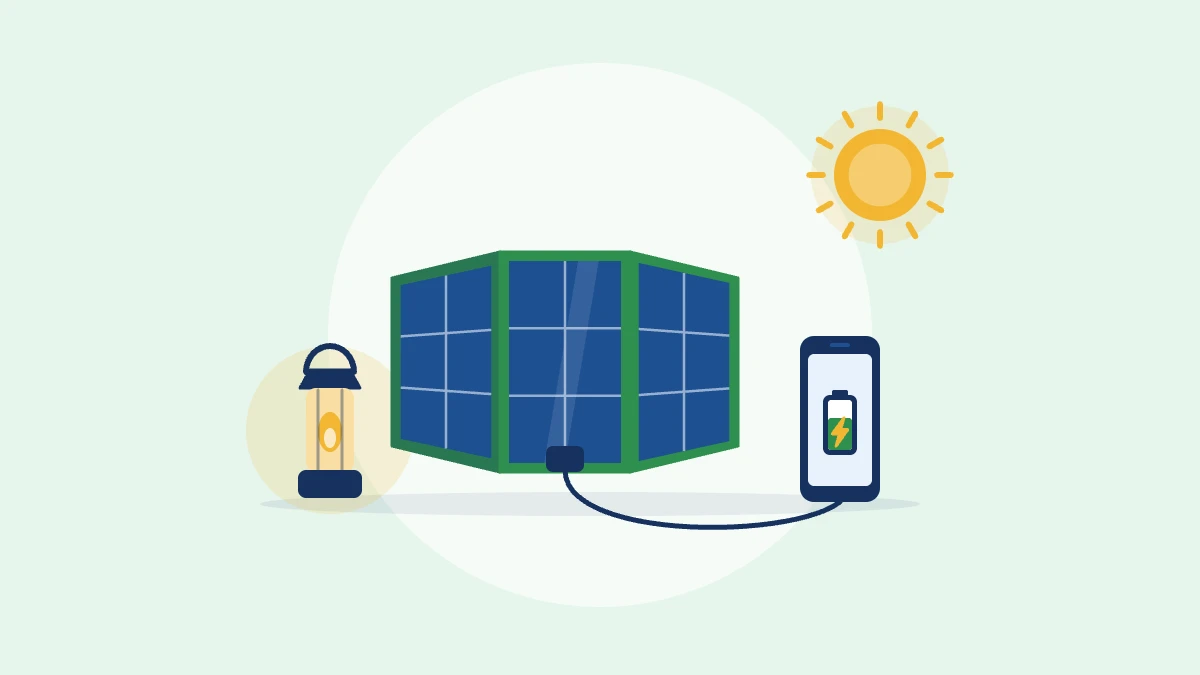
These are fabric-backed panels that fold up like a book and have USB ports built in. They range from about 10 to 30 watts for phone charging, with larger ones meant for portable power stations. They charge devices directly while the sun is out and don’t store power themselves.
Solar power banks
These are battery packs with a small solar panel on the case. The battery is the useful part: charge it from a wall outlet before you leave, then use it to charge your phone. The built-in panel is tiny and can take days of direct sun to refill the battery, so treat it as a bonus rather than the main way to charge.
A popular combination is a folding panel plus a separate power bank. The panel charges the power bank during the day, and the power bank charges your phone whenever you need it.
What to look for
- Wattage. Around 20 to 30 watts is a good range for charging a phone or power bank at a useful speed. Smaller 5 to 10 watt panels are lighter but slow.
- USB-C with Power Delivery. Many phones charge faster over USB-C. Some panels only offer standard 5-volt USB output.
- Number of ports, if you’ll charge more than one device.
- Weight and folded size, especially for backpacking.
- Weather resistance. Look for a water-resistance rating, and remember the ports themselves usually aren’t waterproof.
- A kickstand or loops, so you can angle the panel toward the sun or hang it from a pack or tent.
- Auto-restart. Some chargers stop when a cloud passes and don’t resume on their own, which is frustrating with phones.
Set realistic expectations
Rated wattage is measured in ideal lab conditions. Outdoors, output is often well below the rating because of sun angle, heat, haze and passing clouds. Most phones today have batteries of roughly 3,700 to 5,200 mAh, and in good direct sun a 20 to 30 watt panel can usually charge one in a few hours. On a cloudy day, it may barely keep up with a phone in use. Charging through a window or in the shade is much slower.
Popular options to look at
These are well-known models listed by their makers in 2026. We haven’t tested them, so check current reviews and prices before buying.
- Anker SOLIX PS30: a 30-watt folding panel with a USB-C and a USB-A port.
- BigBlue SolarPowa 28: a 28-watt folding panel with USB-A and USB-C ports. BigBlue sells several sizes.
- Nitecore FSP30: a 30-watt folding panel with two USB-A ports and an 18-watt USB-C Power Delivery port.
- Goal Zero Nomad series: small, rugged panels in 5, 10 and 20-watt sizes with USB output.
- BioLite SolarPanel 5+ and 10+: compact panels with a built-in 3,200 mAh battery and a kickstand, useful for storing a little power during the day.
For power outages
A solar charger can keep a phone running through a long outage, but for anything more, a portable power station with a folding solar panel makes more sense. For keeping your home running, see whether solar panels work during an outage.
For more gift and gadget ideas, see solar-powered gifts.